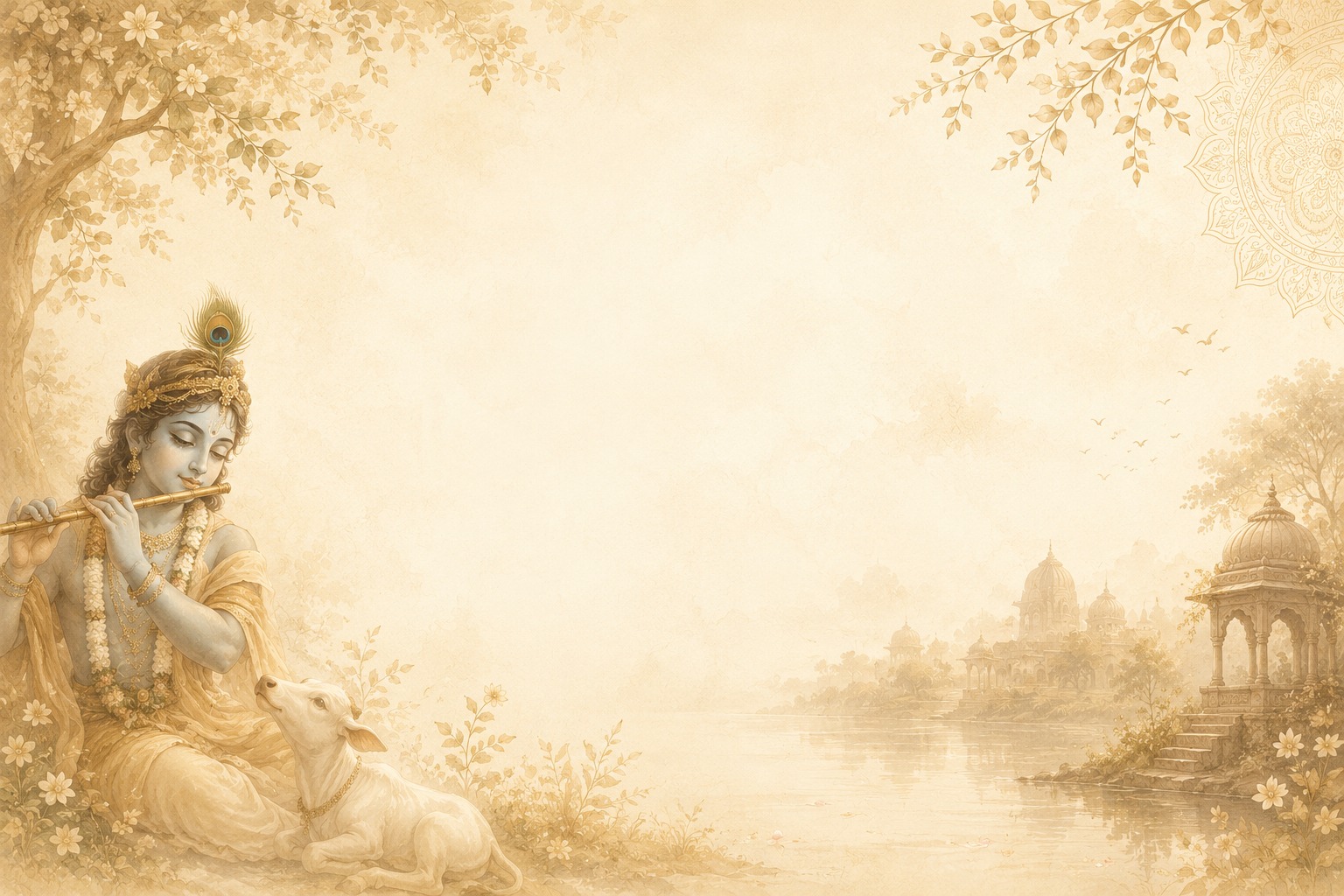
Krishna Stories: Divine Pastimes, Sacred Lessons, Leelas & Spiritual Significance
✦ Sacred Overview
The divine stories of Shri Krishna, chronicled in sacred scriptures like the Shrimad Bhagavata Purana, Vishnu Purana, and the Mahabharata, represent much more than ancient folklore. They embody profound spiritual truths, philosophical allegories, and timeless lessons on love, duty, and devotion. From his sweet childhood pastimes in Vrindavan to his strategic leadership in Mathura and his cosmic guidance on the battlefield of Kurukshetra, Krishna's life serves as a complete blueprint for human existence, revealing how to live righteously while remaining spiritually detached.
What Makes Krishna Stories Unique & Sacred?
Core significance: Shri Krishna's pastimes (Leelas) are divine activities performed not out of cosmic karma or compulsion, but purely out of divine compassion and grace to enlighten and uplift humanity.
In practice, Krishna stories break the barrier between the finite human and the infinite divine. Unlike remote deity narratives, Krishna interacts with seekers as a playful child, a loving friend, a compassionate master, a heroic savior, and a wise teacher. Whether subduing fierce demons or playing his enchanting flute under the moonlit sky, every action conveys deep philosophical wisdom regarding the nature of the soul (Atman) and Supreme Consciousness (Brahman).
What Krishna stories are not: these are not mere fairy tales or historic fables meant solely for entertainment; each pastime carries layers of esoteric, allegorical, and psychological meaning intended to liberate the human mind from worldly illusion (Maya).
Key Eras of Shri Krishna's Life
Vrindavan Pastimes (Childhood & Youth):
- Makhan Chor Leela: Stealing butter to symbolize capturing the pure, unadulterated devotion of seekers.
- Kalia Mardan: Subduing the multi-headed serpent Kalia to clean the Yamuna and conquer pride.
- Govardhan Lila: Lifting the Govardhan hill on his little finger to dismantle ritualistic pride and protect devotees.
Mathura & Dwarka Era (Heroic Ruler & Diplomat):
- Vanquishing Kamsa: Fulfilling the prophecy by ending tyranny and restoring righteous rule.
- Establishing Dwarka: Building the golden city off the western coast to protect the Yadava clan.
- Sudama Charitra: Exemplifying true friendship without distinction of wealth or status.
Kurukshetra Era (The Ultimate Guide):
- Serving as Arjuna's Charioteer: Demonstrating humility by steering the warrior while remaining detached.
- Revealing the Bhagavad Gita: Delivering the eternal song of truth on duty, action, and devotion.
- Viswaroopa Darshan: Unveiling the universal cosmic form to show the unity of all creation.
Spiritual Symbolism Behind the Tales
Stealing Butter (Makhan Chori): Butter represents the pure essence extracted after churning milk through spiritual discipline. Krishna steals this pure heart, showing his hunger for sincere devotion rather than ceremonial rituals.
The Divine Flute (Bansi): The flute is hollowed out, empty of inner obstacles. It symbolizes a seeker who empties their ego so the divine sound can freely flow through them as peace and harmony.
Peacock Feather (Mor Pankh): Worn on his crown, the peacock feather contains all colors of the rainbow yet remains light and untouched, signifying how one should embrace life's varied experiences while staying detached.
Subduing Kalia: The venomous serpent represents the toxic ego and material desires contaminating the pure river of the mind. Krishna dancing on Kalia's hoods represents divine wisdom crushing harmful pride.
Vrindavan Pastimes vs Bhagavad Gita Philosophy
| Dimension | Vrindavan Pastimes (Leela) | Bhagavad Gita Teachings |
|---|---|---|
| Core focus | Pure love, devotion, and divine sweetness (Madhurya) | Duty, righteous action, and spiritual wisdom (Jnana/Karma) |
| Primary Mood | Spontaneous emotion and intimate connection | Analytical discipline and moral clarity |
| Audience | Cowherd boys, Gopis, and simple village devotees | Arjuna, warriors, and earnest seekers of truth |
| Setting | Serene groves of Vrindavan and Yamuna banks | The intense battlefield of Kurukshetra |
| Key Takeaway | Surrender your heart unconditionally to God | Perform your duty without attachment to the results |
The short version: Vrindavan pastimes teach us how to love God spontaneously, while the Bhagavad Gita teaches us how to live righteously in a complex world. Together, they form a complete spiritual vision for the mind and heart.
Timeless Life Lessons for Modern Seekers
Key practical insights:
- Embrace your duties with joy: Krishna shows that even cosmic responsibility can be fulfilled with a serene smile.
- Protect the environment: Pastimes around Govardhan and Yamuna emphasize deep reverence for nature and animals.
- Value character over material wealth: The story of Sudama shows that genuine devotion and integrity matter far more than riches.
- Practice selfless action (Nishkama Karma): Focus on doing the right thing rather than constantly worrying about outcomes.
- Stand against injustice: Krishna never ignores tyranny, showing that spiritual seekers must actively oppose wrongdoing.
What separates true students of Krishna Leela from casual listeners is the effort to internalize these moral lessons—moving beyond mere storytelling into active personal transformation and compassionate living.
Salary and Value of Spiritual Literacy
While spiritual wisdom itself is priceless, formal knowledge of sacred texts like Krishna stories opens meaningful professional opportunities in cultural preservation, media, philosophy education, and storytelling. Speakers, writers, content creators, and spiritual educators in India and abroad earn between ₹3 to 6 LPA at entry levels, with established scholars, authors, and narrative experts earning ₹12 to 25 LPA or more through books, lectures, and digital platforms.
The path generally progresses: Cultural Researcher / Content Creator - Senior Mythological Writer / Scholar - Spiritual Educator / Author - Renowned Narrative Expert.
After deep study and practice, individuals often transition into:
- Authorship & Publishing: Writing books, commentaries, and analytical studies on ancient Indian lore.
- Media & Screenwriting: Scripting television shows, podcasts, and animated features on epic narratives.
- Spiritual Counseling & Mentorship: Guiding individuals through life challenges using Gita and Purana wisdom.
How to Integrate Krishna Wisdom Into Daily Life
- Read scripture regularly: Dedicate time daily to studying the Shrimad Bhagavata Purana or Bhagavad Gita.
- Practice mindfulness & meditation: Reflect on the divine attributes of Shri Krishna to cultivate mental peace.
- Engage in selfless service (Seva): Help others without expecting personal gain, seeing the divine in all living beings.
- Maintain pure intentions: Keep your heart free from malice, pride, and greed, keeping your consciousness pure.
- Share inspiring tales: Pass on these sacred stories to younger generations to preserve cultural heritage.
Is Reading Krishna Stories Right for You?
You will deeply resonate with this if:
- You seek moral clarity, inner peace, and emotional balance in daily life
- You enjoy rich symbolism, allegorical tales, and deep ancient philosophy
- You want to deepen your devotion and understanding of Sanatana Dharma
This might not suit you if:
- You expect literal, physical explanations for every mystical allegory
- You prefer purely secular, material literature without spiritual themes
- You are looking for quick entertainment without reflecting on deeper truths
FAQs
What is the primary source for Krishna's childhood stories?
The Tenth Canto of the Shrimad Bhagavata Purana is the most detailed and revered source for Shri Krishna's Vrindavan pastimes.
Why did Krishna steal butter in Gokul?
Esoterically, butter represents the pure, churned devotion of the human soul. Krishna steals it to show his love for genuine, unadulterated hearts.
Are Krishna stories relevant for non-religious readers?
Yes. Beyond religious devotion, the stories offer profound psychological insights, ethical principles, leadership lessons, and artistic inspiration.
What is the main message of the Govardhan Lila?
It teaches protection of nature, humility, and the rejection of ritualistic pride in favor of direct, loving faith.
How do Krishna stories differ from the Mahabharata war narrative?
Childhood pastimes focus on sweet intimacy and divine love (Madhurya), whereas the Mahabharata emphasizes duty, strategy, justice, and cosmic order (Dharma).
How can I start learning more about Krishna's life?
Start by reading simplified translations of the Bhagavata Purana or the Bhagavad Gita, or explore specialized story guides and commentaries.
Next Step
If you want to explore specific pastimes in depth or understand the philosophical connection between Radha Prem, Govardhan Lila, and the Bhagavad Gita, explore our curated story collection today.
Related Stories
Impact of Divine Wisdom in Daily Life
In today's fast-paced world, reflecting on Krishna stories provides a powerful antidote to modern stress, anxiety, and moral ambiguity.
These narratives teach emotional resilience by reminding us that life includes both sweet pastimes and fierce battles, and that remaining centered in higher wisdom is the key to mental tranquility.
Ultimately, living Krishna's message means acting with excellence, loving unconditionally, and maintaining an inner sanctuary of peace regardless of external circumstances.
Immerse Further into Divine Wisdom
Discover more sacred pastimes, devotional music, and timeless teachings from the Shrimad Bhagavad Gita.
Explore More Stories